Properly Fermented, Patiently Aged
Fermentation and aging are a profound transformation: carefully selected soybeans and rice become miso through the living power of yeast and enzymes and the blessings of Nagano's climate and terroir. Since our founding in 1928, we have steadfastly preserved the Shinshu tradition of miso making through two methods—natural fermentation and temperature-controlled fermentation.
For Exceptional Umami and Aroma: Natural or Temperature-Controlled Fermentation
Our temperature-controlled miso is not the quick-fermented type that became widespread after the Meiji era and matures in only a few weeks. It is aged for four to six months under precise temperature control, following a cycle that recreates the seasonal changes of spring, summer, autumn, and winter—just as in natural fermentation.
Natural fermentation takes still more time and care. The prepared soybeans and rice rest in our miso storehouse for about a year, maturing slowly through Nagano's changing seasons into a deep red miso with complex, rounded umami and a distinctive aroma that can only be created here.
Both methods require far more time and labor than quick fermentation and may be less efficient for a producer. Yet because we value above all the umami and aroma nurtured by fermentation, we remain committed to them.
As yeast ferments, soybean proteins are transformed into amino acids, creating miso's full, natural umami. The profound aroma of authentic miso emerges only in the final stage of fermentation—and only after extended aging.
Some miso aroma comes from alcoholic fermentation of sugars in soybeans and rice. Its deepest fragrance, however, arises only as their oils ferment over a long maturation. The noble, rich aroma of naturally fermented miso can never be replicated by quick fermentation.
The flavor, aroma, and vitality of living miso nurtured by time and place are entirely different from those of a hastily matured imitation. For three generations and more than ninety years, our dedication has been to authentic nama miso. We do not seek to make something resembling miso; we make miso itself.
Step 1: Steam the Soybeans
Step 2: Make Rice Koji
Step 3: Prepare, Ferment, and Age
Step 4: Package and Ship
Shipped Only at Its Peak—as Determined by Our Miso Master
Longer aging is not always better. The ideal maturation period depends on the climate, terroir, temperature, and humidity of the place where miso is made, as well as the intended flavor and aroma.
Here on the Zenkojidaira plain in Nagano, natural fermentation for one full year produces the finest flavor. We therefore call a product naturally fermented only when it has rested patiently for a year.
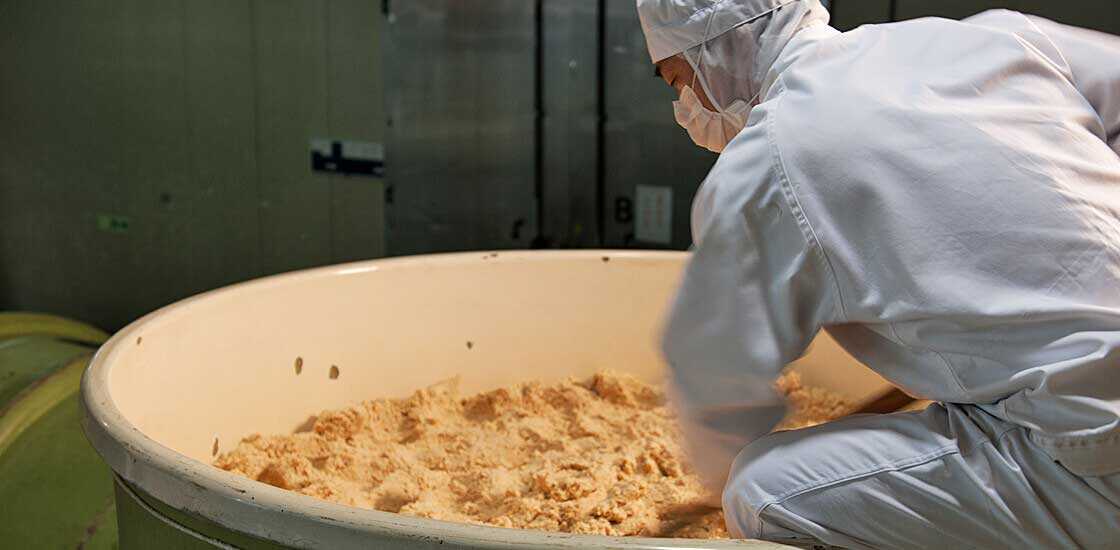
The maturation period is a guideline, not a fixed count of days. Determining the perfect point of maturity depends on the experience and intuition of the artisan known as the miso toji, or miso master.The master assesses maturation, turns the miso in its vats so fermentation proceeds evenly, and tends it every day with the care and affection of raising a child.
Like fresh foods, miso has a peak season—a moment when its aroma and umami are at their very best.For both temperature-controlled and naturally fermented miso, our experienced miso master carefully evaluates flavor, aroma, color, and texture. Only when the miso has reached its peak is it approved for shipment.
To deliver that peak flavor, we continue striving to bring you living miso without additives, with the same uncompromising care devoted to packaging and delivery methods.

2180-1
Shimogawara, Kazama, Nagano City, Nagano 381-0023, Japan
View on Google Maps ☎026-221-3868